
When Do Kids Have Sex, Marry, and Have Babies Today?

If you’re parenting a child or teen today, it can feel like the rules of growing up have completely changed—because in many ways, they have.
The ages at which people first have sex, get married, and become parents look very different than they did even a generation ago. And yet, many parents are still working from outdated assumptions about what’s “normal,” what’s “too early,” or what their child is supposed to be ready for at a certain age.
The research tells a clearer—and more nuanced—story.
Understanding these shifting timelines isn’t about encouraging kids to grow up faster. It’s about helping parents align conversations with reality, reduce fear-based messaging, and replace silence with steady, values-based guidance.
Here’s what the data actually shows.
What Research Tells Us About the Age of First Intercourse in the U.S.
When researchers talk about “age at first intercourse,” they’re typically referring to first vaginal-penile sex—not first sexual experience overall. That distinction matters, because many young people engage in other forms of sexual behavior, such as oral sex or mutual masturbation, before intercourse ever happens.
With that definition in mind, research consistently shows that the average age of first intercourse in the U.S. falls between 15 and 18 years old. By age 20, more than 80% of young adults report having had intercourse.
This isn’t a sudden shift—it’s part of a longer social pattern that began decades ago. Since the 1970s, the average age of first intercourse declined, influenced by cultural changes, later marriage, and evolving social norms. Today, most teens do not wait until marriage to have sex, even if they delay marriage itself.
It’s also important to note that teen sexual experiences tend to be episodic and infrequent, especially compared to adult sexual relationships. This isn’t a picture of constant sexual activity—it’s a picture of curiosity, exploration, and learning within the context of adolescent development.
The data does show differences based on race, socioeconomic status, and gender. On average:
-
Teens from lower-income backgrounds tend to become sexually active earlier
-
Males report earlier first intercourse than females
-
Many young women report first sex as relationship-driven, while young men more often cite physical reasons
First intercourse most often happens within a dating relationship, is frequently described as spontaneous, and—importantly—contraception use has increased dramatically over time. Condoms remain the most common method used at first intercourse, and nearly 80% of adolescents report using contraception the first time they have sex.
The takeaway for parents isn’t that “kids are having sex younger.” It’s that sexual development often begins before adulthood milestones—and silence doesn’t stop it. Guidance does.
Americans Are Having Children Later Than Ever
While first sexual experiences often happen in the teen or young adult years, parenthood is happening much later.
According to recent CDC data, the average age of mothers giving birth in the U.S. reached nearly 30 years old in 2023, and first-time mothers are now, on average, 27.5 years old. This marks a steady rise over decades—in 1970, the average first-time mother was just 21.4 years old.
This delay spans across racial, ethnic, and geographic groups, though the exact timing varies. Women in large metropolitan areas tend to have children later than those in rural areas, and first births among women 35 and older have increased sharply, while births among women under 25 have dropped significantly.
Here’s why this matters for parents of teens:
There is now a much longer gap between the age when young people may become sexually active and the age when they plan to have children. That gap makes contraception, sexual health education, and open communication more important—not less.
When parents avoid conversations about birth control because they hope their teen will “wait,” they’re often leaving kids unprepared for real-life decisions that may happen years before parenthood is even on the horizon. Talking about contraception isn’t permission—it’s protection.
Teens who understand how pregnancy happens, how contraception works, and how to advocate for their own boundaries are better equipped to align their choices with their goals—whether those goals include college, career, travel, or simply time to grow.
If this feels like a hard conversation to start, you’re not alone. I walk parents through this exact moment—what to say, how to say it, and how to keep it values-based rather than fear-based—in this post:
👉 How to Approach the Birth Control Chat with Your Teen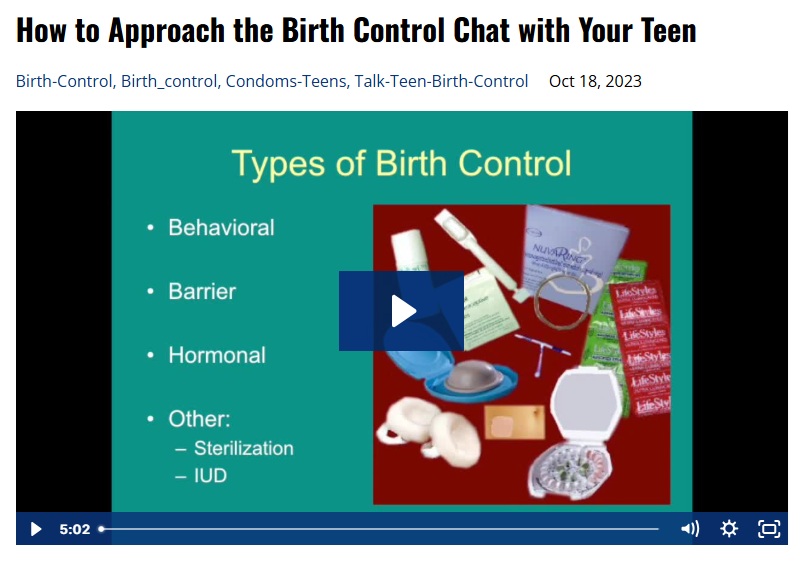
These conversations don’t have to be one big “talk.” They work best when they’re ongoing, age-appropriate, and grounded in trust.
The Average Age of Marriage in the U.S. Is Higher Than Ever
Marriage, like parenthood, is also happening later than it used to.
Today, the average age at first marriage in the U.S. is around 32 years old. Census data shows that men marry for the first time at about 30.2 years, while women average 28.4 years—a gap that has remained fairly consistent over time.
This is a dramatic shift from the 1950s, when men married around 22.5 and women around 20.1. Across nearly every state—and especially in the Northeast and West—people are waiting longer to marry, often into their mid-30s.
Chart from https://nchstats.com/

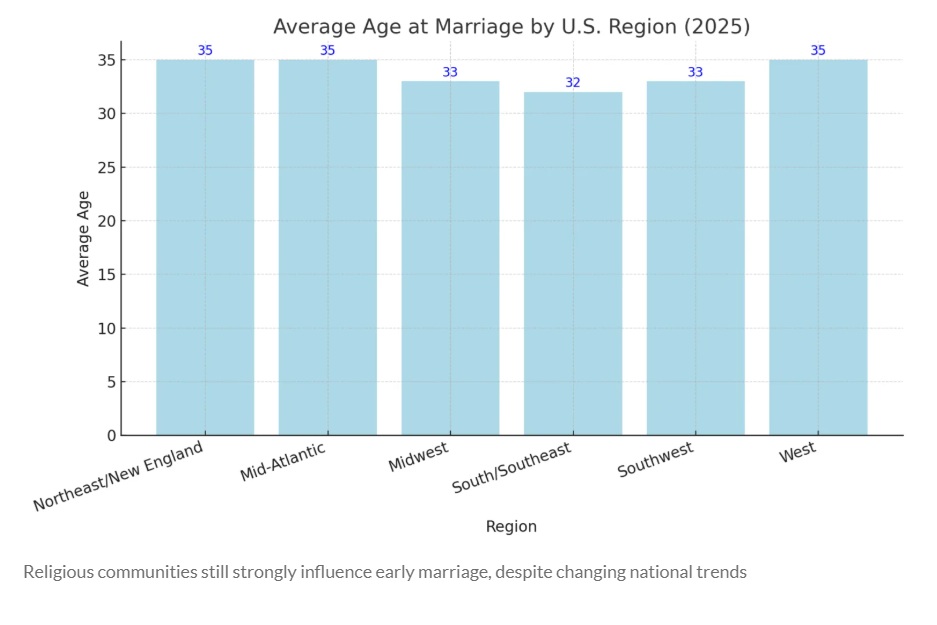
The reasons are layered: longer education timelines, financial realities, career goals, and a cultural shift toward viewing marriage as a personal milestone rather than a requirement of adulthood.
For parents, this reinforces a key point: sexual activity, marriage, and parenthood no longer follow a single, predictable order.
That doesn’t mean values don’t matter. It means values need to be talked about, not assumed.
When kids grow up understanding their family’s values around relationships, consent, responsibility, and health—and also understand the practical realities of sex and reproduction—they’re better able to make choices that reflect both.
The research is clear: growing up today looks different than it did for previous generations. Sex often comes earlier. Marriage and parenthood come later. And the space in between is where parents have the most influence.
Not through control.
Not through fear.
But through calm, honest, ongoing conversations.
Those conversations don’t push kids to grow up faster—they help them grow up safer, more informed, and more confident in their ability to make decisions that align with who they are and who they want to become.
If you’re looking for support as you navigate these topics, you’ll find more research-backed guidance, conversation scripts, and parent resources at www.thetalkinstitute.com.
