
When Should You Stop Being Naked Around Your Kids?
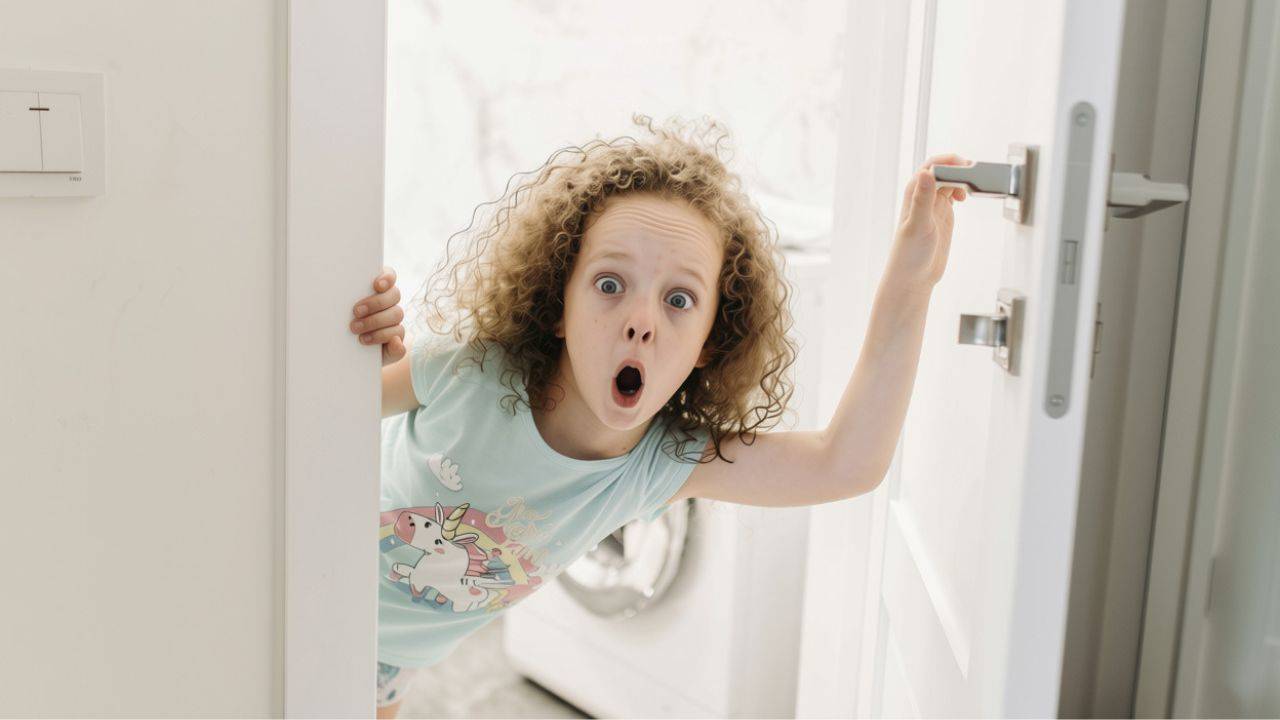
If you’re a parent, chances are you’ve experienced at least one of these moments: your child barges into the bathroom, races naked through the house without a second thought, or strikes up a full conversation while you’re standing there completely undressed. 🥴
When kids are little, there can be a whole lot of nudity—and not a whole lot of concern about it.
But then our kids grow.
The child who happily ran naked through the house at five is suddenly ten and going through puberty. Or maybe we're the ones beginning to wonder, Should we be covering up more now? Should they? When do we start teaching modesty?
And perhaps the trickiest question of all:
How do we teach our kids about privacy and modesty without sending the message that their bodies are embarrassing, inappropriate, or something to be ashamed of?
It's an important distinction—and one worth talking about.
When Should You Stop being Naked Around your Kids?
There isn't one universal rule for how much nudity is appropriate within a family. Families have different cultures, beliefs, comfort levels, and boundaries around bodies.
Some families are comfortable walking from the shower to the bedroom naked. Others wouldn't dream of it. Some young children routinely see their parents changing or showering. In other homes, bathroom and bedroom doors are always closed.
What matters more than creating one "right" rule is the message we're sending along with it.
We want our kids to understand:
Bodies are normal. Bodies aren't shameful. AND everyone gets to decide who sees their body and when.
Those ideas can—and should—exist together.
I've had questions from families like:
Is my son getting too old to see me naked?
Should Dad still change in front of our daughter?
What about a brother and sister sharing a bathroom or changing in the same room?
Is there an age when that needs to stop?
There isn't a magic birthday when nudity between opposite-sex family members suddenly becomes inappropriate. But as kids get older—particularly as they move toward puberty—it's a good time to become more intentional about privacy.
And often, your child will tell you before you ever have to make a rule about it.
The daughter who used to walk right into the bathroom while Dad was showering may suddenly knock. A son might turn away when Mom is changing. Siblings who once jumped into the bathtub together may suddenly want separate bathrooms or closed doors.
Follow their lead.
We don't need to announce, "You're too old to see Dad naked now," which can unintentionally make the body—or the difference between male and female bodies—feel sexual or shameful.
Instead, make increased privacy a normal part of everyone growing up:
"Now that you guys are getting older, we're going to give each other more privacy when we're changing and using the bathroom."
It's also a great opportunity to teach kids that privacy isn't rejection. Mom closing the bathroom door doesn't mean her body is bad. Your daughter not wanting Dad in the room while she changes doesn't mean there's suddenly something weird about their relationship. A brother asking his sister to leave while he gets dressed isn't being rude.
They're practicing boundaries.
Opposite-sex family members can also provide a healthy, matter-of-fact understanding that bodies come in different shapes and have different parts. A young child noticing that Mom's body looks different from Dad's isn't harmful or inherently sexual. It's usually just information—and often the beginning of some very normal questions.
But as children become more aware of bodies, sexuality, and their own developing bodies, their need for privacy may increase. That deserves to be respected regardless of gender.
The same goes for siblings.
Brothers and sisters who happily changed clothes in front of each other when they were little may reach a point where one wants privacy before the other does. The child asking for privacy gets to set that boundary. We don't tease them for suddenly being "shy," and we don't let a sibling ignore the request because "You've seen each other naked a million times."
Past comfort doesn't equal permanent permission.
And this is a pretty powerful lesson for later relationships:
Someone gets to change their mind about who sees their body—even if they were comfortable with it before.
That's consent and body autonomy in one of its earliest, simplest forms.
Parents can model the same thing. Maybe you've always changed clothes in front of your kids, but as your son or daughter gets older, you decide you'd prefer more privacy. That's okay too.
The goal isn't to make everyone afraid of seeing a naked body.
It's to create a family culture where bodies aren't shameful and privacy is respected.
But What If MY Kid Isn't Modest At All?
Here's where parenting can suddenly get awkward.
Your child may be perfectly comfortable with their body. Fantastic! We don't want to squash that.
But the seven-year-old who thought nothing of wandering through the house in underwear may now be eleven with a changing body—and you may realize it's time for some new family expectations.
How do you say, "Hey, you need to put some clothes on," without making your child suddenly wonder, Wait...is there something wrong with my body now?
Start with the reason rather than the body.
You might say:
"There's absolutely nothing wrong with your body. As you get older, though, we start practicing a little more privacy with the parts of our bodies covered by a swimsuit. That's part of growing up and learning that our bodies belong to us."
Or:
"I love that you're comfortable with your body, and I hope you always are. We're just going to start being a little more aware of privacy now that you're getting older."
Notice what we're not saying:
"You're too developed to wear that."
"People are going to look at you."
"Cover yourself up!"
"That's inappropriate."
Those messages can unintentionally teach a child that something about their changing body has suddenly become a problem.
So...How Do We Teach Modesty Without Shame?
I think it helps to redefine what we mean by modesty.
Modesty doesn't have to mean being embarrassed by your body or covering yourself because your body might make someone else uncomfortable.
Instead, we can teach modesty as awareness of privacy, setting, boundaries, and personal choice.
Different situations have different expectations.
A bathing suit makes sense at the pool. Underwear might be fine while you're getting ready in your own home but not when your friend's family comes over. You might change clothes in front of a sibling when you're six and decide you don't want to anymore when you're ten.
These aren't judgments about bodies. They're social and personal boundaries.
And this applies to all kids, regardless of gender.
Be especially careful not to make modesty a lesson that girls receive because their developing bodies might attract attention. A child's body isn't responsible for managing someone else's thoughts or behavior.
We can teach kids to dress appropriately for different environments without making their bodies the problem.
What If My Child Is Suddenly TOO Modest?
There's another side of this conversation that doesn't get talked about nearly enough.
Sometimes a child who used to be comfortable in their body suddenly wants to hide it.
They won't take off their sweatshirt—even when it's hot.
They refuse to wear a swimsuit.
They change clothes underneath a towel.
They don't want anyone to see their stomach.
They start comparing their body to friends or kids online.
They may even stop wanting to participate in activities like swimming because someone might see their body.
Don't immediately dismiss it as, "They're just modest now."
Get curious.
Puberty can make kids intensely aware of their bodies. Changes happen at different rates, and suddenly kids are comparing height, weight, breasts, muscles, body hair, skin, hips, genitals and everything in between.
Instead of saying, "Don't be ridiculous—you look fine," try opening the door:
"I've noticed you seem a little more uncomfortable with your body lately. How are you feeling about all the changes happening?"
Or:
"You never have to show your body when you don't want to. I also want to make sure you're not feeling like there's something wrong with your body or that you need to hide it."
Then listen.
Maybe someone made a comment.
Maybe they're developing earlier—or later—than their friends.
Maybe something they saw online made them question how they're "supposed" to look.
Maybe they simply want more privacy.
The goal isn't to talk them out of modesty. Their boundaries deserve respect. We just want to make sure shame or insecurity isn't quietly driving those boundaries.
Watch the Messages We Send About Our Own Bodies, Too
We can have all the right conversations with our kids and still accidentally teach body shame through the way we talk about ourselves.
"I can't wear that with my stomach."
"Ugh, I look terrible."
"I need to lose ten pounds before summer."
"Nobody needs to see this in a bathing suit."
Our kids hear us.
If we're telling them all bodies are good bodies while constantly criticizing our own, they're going to notice the disconnect.
That doesn't mean you have to suddenly love every inch of your body every second of every day. Most adults don't.
But we can practice talking about our bodies with respect—especially when little ears are listening.
Let Your Family's Boundaries Grow With Your Kids
The rules around nudity in your family don't have to remain exactly the same from toddlerhood through the teenage years.
In fact, they probably shouldn't.
As kids mature, privacy becomes more important. Their bodies change. Their awareness changes. Their comfort levels change. And our family boundaries can change right along with them.
Talk about it.
"You're getting older, so we're going to start knocking before coming into your room."
"Let's make sure everyone has privacy when they're changing."
"If you ever want more privacy from me, you can tell me."
And remember that privacy works both ways. Parents are allowed to have boundaries too.
The Bottom Line
Whether your family is more "let it all hang out" or "please put on a robe," the bigger lesson isn't really about nudity.
It's about raising kids who can feel comfortable in their bodies while also understanding privacy, boundaries, consent, and context.
We don't want our kids growing up believing their bodies are shameful.
But we also don't want them growing up without an understanding that some parts of ourselves are private and that we get to choose when, where, and with whom we share them.
And when puberty enters the picture, don't suddenly change the rules without talking about why.
Their changing body isn't the problem.
Growing up simply comes with new boundaries—and that's a conversation we can have without embarrassment, fear, or shame.
Like so many things when it comes to raising kids and talking about bodies, this doesn't need to be one big, awkward TALK.
It's just another conversation we keep having as they grow.
You've got this! 👊
